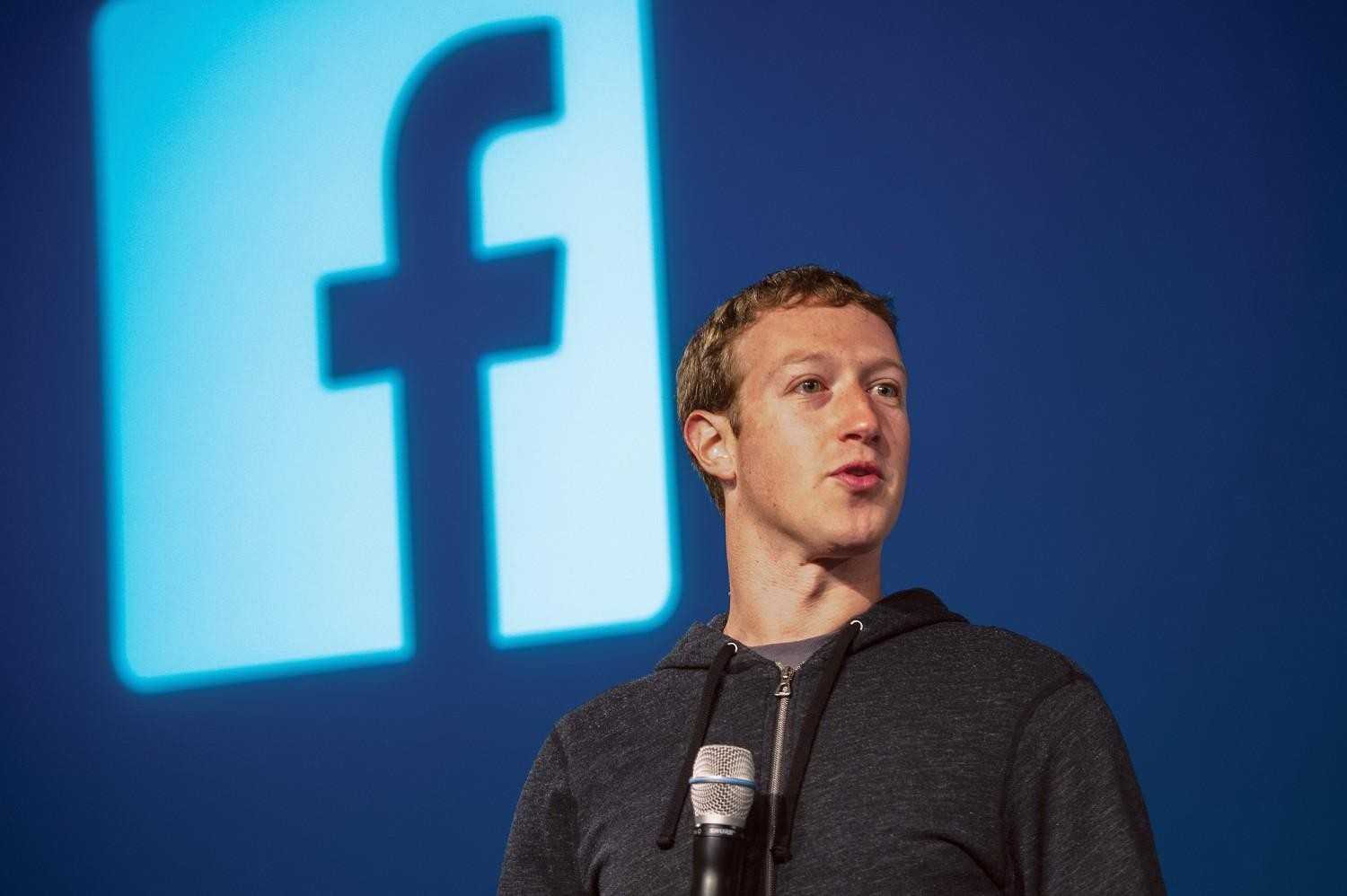
Picture this: it’s a freezing, miserable night in late 2003. You’re a 19-year-old sophomore at Harvard named Mark Zuckerberg. You’re brilliant, you’re bored, and you’ve just been dumped—or at least, that’s the Hollywood version. The reality is probably a little less dramatic but a lot nerdier. You’re sitting in your dorm room in Kirkland House, staring at a computer screen, and you decide to do something incredibly reckless. You hack into the directories of the different Harvard dorms, scrape the ID photos of the student body, and throw them up on a crude little website you slap together called Facemash. The premise? A simple, shallow "hot or not" game. You put two pictures of your classmates side by side and let the campus vote on who’s more attractive.
Now, you have to understand the culture at Harvard back then. It was an institution built on centuries of tradition, prestige, and a very specific kind of social hierarchy. And suddenly, here comes this digital wrecking ball. Facemash didn’t just catch on; it exploded. Within hours, the site was being forwarded to every mailing list on campus. The traffic was so heavy, so intense, that it literally crashed parts of Harvard’s computer network. People were furious—especially the women who found their faces plastered on the internet without their permission. The disciplinary board dragged Mark in, put him on academic probation, and forced him to shut it down. But while everyone else was focused on the outrage, Mark was looking at the data. He saw something no one else did. He saw that people were absolutely obsessed with each other. They didn’t want to look at generic internet content; they wanted to look at their friends, their classmates, their crushes. The voyeuristic appetite was bottomless.
Because of the Facemash stunt, Mark got a reputation on campus as a sort of prodigy hacker. And that reputation attracted the attention of three upperclassmen: Cameron and Tyler Winklevoss, and their friend Divya Narendra. If you’ve seen The Social Network, you know the Winklevoss twins. They were essentially the physical embodiment of the Harvard establishment—tall, wealthy, aristocratic, rowers who practically oozed old money and entitlement. They had an idea for a site called HarvardConnection, an exclusive dating and social networking site for the university elite. They had the idea, but they didn’t have the technical chops to build it. So, they approached Mark.
Mark agreed to help them. But here is where the first great betrayal of the Facebook story happens. For weeks, Mark strung the Winklevoss twins along. He would dodge their emails, give them vague updates, tell them he was busy with schoolwork. "I'm working on the login functionality," he’d say. "Just need a few more days." But in reality, he wasn't building their site. He was building his own. He took their core premise—a social network mapped onto the real-world connections of a college campus—and he stripped away the elitist dating-site vibe, making it broader, faster, and more addictive.
On February 4, 2004, Mark launched Thefacebook.com. He didn’t tell the Winklevoss twins. They found out by reading an article in The Harvard Crimson. You can imagine the absolute nuclear meltdown that happened in their dorm room. They were furious, claiming Mark stole their idea. And frankly, they spent the next decade in courtrooms trying to prove it, eventually walking away with a $65 million settlement, which sounds like a lot until you realize what Facebook eventually became worth. But back in 2004, Mark didn’t care about their anger. He was moving too fast.
Thefacebook spread through Harvard like a virus. Within a month, half the undergraduate population was on it. But Mark didn’t build it alone. He needed money to rent servers because the traffic was already getting too expensive for a college kid to handle. Enter Eduardo Saverin. Eduardo was another Harvard student, but unlike Mark, he was a business guy. He wore suits to class, he liked making money, and he had a bank account that could float the company’s early costs. Eduardo put up $15,000 to buy servers and in exchange, he became the co-founder and Chief Financial Officer. They were a team. Mark wrote the code, Eduardo handled the business. It sounded like the perfect partnership.
But as the school year ended, the dynamic completely shifted. Mark decided to pack up and move out to Palo Alto, California, for the summer of 2004. He rented a house, filled it with fellow hackers and interns, and turned it into this chaotic, frat-house-meets-startup-incubator. There were zip lines going into the pool, empty beer cans everywhere, code being written at 3:00 AM. Eduardo, however, didn’t go to California. He went to New York for a corporate internship. It was the fatal mistake of his life.
While Eduardo was in New York wearing a tie and trying to sell ads for Thefacebook to local businesses, Mark was in Silicon Valley breathing the air of the tech gods. And more importantly, Mark met Sean Parker. Sean was already a legend. He had co-founded Napster, the file-sharing service that completely destroyed and rebuilt the music industry. Sean was everything Mark wasn’t at the time: charismatic, paranoid, visionary, deeply connected in the Valley, and notoriously rebellious. Sean took one look at Thefacebook and knew exactly what it was. He told Mark, "This isn't a college project. This is a billion-dollar company. Oh, and drop the 'The.' Just Facebook."
Sean practically moved into the Palo Alto house. He started introducing Mark to heavy-hitting venture capitalists like Peter Thiel, who ended up writing the first major angel check for $500,000. Under Sean’s influence, Mark’s vision expanded exponentially. But there was a problem, and his name was Eduardo Saverin. Eduardo still owned a massive chunk of the company, but he wasn’t contributing to the code, he wasn’t in California, and he was completely disconnected from the Silicon Valley reality. Furthermore, Eduardo had frozen the company’s bank accounts at one point out of frustration, which almost killed the site. For Mark, who valued the product above all human relationships, that was an unforgivable sin.
What happened next is one of the most ruthless corporate maneuvers in modern history. Mark, advised by his new Valley lawyers and Sean Parker, set up a new Delaware corporation to acquire the old Florida LLC that he and Eduardo had formed. They restructured the company and issued millions of new shares to themselves, to Peter Thiel, and to new investors. Eduardo was handed a stack of legal documents to sign, completely unaware of the trap. Once the ink was dry, the new shares diluted Eduardo’s stake in the company from around 30% down to less than 10%, and eventually even less. They legally pushed him out of his own company. When Eduardo found out, the screaming match that echoed through the Facebook offices was legendary. He sued, of course. His name was eventually restored as a co-founder on the company’s masthead, and he walked away with billions in stock, but the friendship was dead and buried. Mark had learned a crucial lesson: the mission comes first. Nothing, and no one, stands in the way of growth.
By 2006, Facebook was no longer just a college thing. It was opening up to high schools, to corporate networks, and eventually, to anyone in the world with a valid email address. But there was a massive structural problem with the site. If you wanted to see what your friends were doing, you had to manually click on their profiles. It was a pull-model of information. You had to go looking for it. Mark and his engineers realized this was highly inefficient. So, they built the News Feed.
Today, the idea of a social media feed is so basic we don’t even think about it. It is the fundamental architecture of the modern internet. But when Facebook launched the News Feed in September 2006, it was a profound shock to the human psyche. Suddenly, every time you logged in, there was a continuous, scrolling stream of everything your friends were doing. Who just became single, who posted a photo, who commented on whose wall. It was all right there, thrust into your face.
The backlash was instant and terrifying. Users felt massively violated. They felt like their privacy had been shattered, even though they were the ones who had provided the information in the first place. Groups popped up on Facebook called "I Hate the Facebook News Feed" gathering hundreds of thousands of members overnight. People staged protests outside the company’s office. Mark was watching the dashboards in real-time, terrified that he had just destroyed his own company.
But then, he noticed something fascinating in the data. Yes, people were joining these protest groups. Yes, they were typing angry messages. But to do that, they were logging into Facebook, and they were staying logged in longer than ever before. Page views were going through the roof. People were complaining about the News Feed on the News Feed. They were outraged, but they were absolutely addicted. They couldn't look away.
This was a defining moment for Mark Zuckerberg and the DNA of Facebook. He learned that user outrage does not equal user abandonment. He realized that if you build a product that taps into fundamental human psychology—our desperate need to know what our tribe is doing—people will surrender their privacy, even if they complain about it. There’s an infamous instant message exchange from back in the Harvard days that always haunts the Facebook story. A friend asked Mark how he got so many people to submit their emails, addresses, and photos to the site. Mark replied, "People just submitted it. I don't know why. They 'trust me'. Dumb fucks." Whether he meant it as a joke or not, that underlying dynamic—the tension between what users give up and what the platform takes—became the defining conflict of the 21st century.
As Facebook exploded toward hundreds of millions of users, Mark realized he was a great engineer and a visionary product guy, but he was not a great CEO of a massive, revenue-generating corporation. He needed an adult in the room. In 2008, he poached Sheryl Sandberg from Google. Sheryl was brilliant, polished, fiercely organized, and she understood advertising better than almost anyone on the planet. Mark gave her the COO title and basically said, "You figure out how to make the money; I’ll figure out how to build the site."
Sheryl Sandberg built the monetization engine that turned Facebook into an empire. She realized that Facebook didn’t just have eyeballs; it had the most precise psychological profiles of human beings ever assembled in history. It knew what you liked, who you loved, what you feared, where you went, what you bought. Sheryl and her team built an advertising platform that allowed companies to target users with terrifying precision. It wasn't just "show this ad to women aged 18-24." It was "show this ad to women aged 18-24 who live in a specific zip code, recently got engaged, love indie rock, and vote a certain way." The money started pouring in like a tidal wave. Facebook wasn't just a cool website anymore; it was an apex predator in the global advertising market.
But as the company transitioned to mobile in the early 2010s, Mark became deeply paranoid. He knew that the graveyard of the internet was full of companies that missed the next big shift—MySpace, Yahoo, AOL. Mark lived by the motto "move fast and break things," but his deepest fear was being broken by someone moving faster.
In 2012, he spotted a threat. It was a little photo-sharing app with retro filters called Instagram. It only had about a dozen employees, but it was catching on like wildfire, especially on smartphones, which was exactly where Facebook was struggling to transition. Mark didn’t wait for Instagram to become a lethal competitor. He personally bypassed his board of directors, negotiated directly with Instagram’s founder, Kevin Systrom, over a single weekend, and bought the company for $1 billion. At the time, Wall Street thought he was absolutely insane. A billion dollars for an app with zero revenue and 13 employees? It was mocked endlessly. But Mark was playing 3D chess. Today, Instagram is worth hundreds of billions of dollars and is essentially the cultural engine that keeps Meta relevant. It was the steal of the century.
He did it again in 2014 with WhatsApp. Jan Koum, the founder of WhatsApp, had built the dominant messaging app for the entire world outside of the US. Mark saw that messaging was the next great frontier. So, he bought WhatsApp for an eye-watering $19 billion.
But Mark’s strategy wasn’t just about buying competitors. If you refused to be bought, he would simply destroy you. The prime example is Snapchat. Evan Spiegel, the young founder of Snapchat, famously turned down a $3 billion acquisition offer from Zuckerberg. Mark’s response? He ordered his teams to ruthlessly clone Snapchat’s defining feature—the ephemeral, disappearing video "Story." Facebook put "Stories" at the top of Instagram, at the top of Facebook, at the top of WhatsApp. They used their massive scale to smother Snapchat's growth. It was brutal, it was effective, and it sent a clear message to Silicon Valley: do not cross Mark Zuckerberg. He operates like a digital mafia boss. If you have something he wants, he will buy you. If you say no, he will copy you, scale it, and crush you.
By 2016, Facebook was at the absolute peak of its power. It had connected nearly three billion people. It was a global utility. But this is where the story takes a dark, staggering turn. The company had spent years optimizing its algorithms for one thing: engagement. They wanted you on the site as long as possible so they could show you as many ads as possible. And what drives engagement? Human emotion. But not just any emotion. The Facebook engineers quickly learned that positive emotions—happiness, joy, contentment—don't keep people clicking. You know what keeps people glued to a screen? Outrage. Anger. Tribalism. Fear.
The algorithm began surfacing content that made people furious, because furious people type comments, share posts, and stay logged in. Without even meaning to, Facebook had built a machine that actively rewarded polarization.
The real-world consequences of this became horribly apparent. In places like Myanmar, military officials and extremists used Facebook—which was effectively the entire internet for most people in the country—to spread terrifying, fabricated propaganda about the Rohingya Muslim minority. The algorithm amplified the hate speech because it generated huge engagement. The result was a real-world genocide. Whole villages were burned, thousands were murdered, and hundreds of thousands fled as refugees. Human rights investigators directly pointed to Facebook as a catalyst. The company’s defense was basically that they didn't have enough content moderators who spoke Burmese. It was a catastrophic failure of responsibility. They had moved fast, and they had broken a country.
And then came the 2016 US Presidential Election. Facebook became a playground for foreign interference. Russian troll farms set up thousands of fake pages, posing as Black Lives Matter activists, Texas secessionists, gun rights advocates, and anti-immigration hardliners. They didn't even care who won; they just wanted to tear the fabric of American society apart by pitting people against each other. And Facebook’s algorithm happily served up this polarizing garbage to millions of Americans because it drove off-the-charts engagement. Mark initially scoffed at the idea that fake news on Facebook influenced the election, calling it a "pretty crazy idea." But the evidence became undeniable.
But the real earthquake—the scandal that forever changed how the world views Facebook—happened in 2018. The Cambridge Analytica scandal.
Here is the wild part about Cambridge Analytica: it wasn’t actually a hack. It was a feature working exactly as designed, which is almost worse. Years prior, Facebook had opened up its platform to third-party developers, allowing them to build apps and quizzes. A researcher named Aleksandr Kogan built a personality quiz app. Only about 270,000 people downloaded it. But back then, Facebook's rules allowed developers to not only harvest the data of the people who took the quiz but also to scrape the data of all their friends. So, those 270,000 downloads turned into a massive dataset of 87 million American voters. Their likes, their locations, their private messages, their psychological profiles—all hoovered up without their explicit consent.
Kogan sold this data to a shadowy political consulting firm called Cambridge Analytica, which was funded by right-wing billionaires and heavily involved in the Trump campaign. They used this data to build psychographic profiles of American voters, targeting them with hyper-specific, manipulative political ads. When the story broke, courtesy of a whistleblower named Christopher Wylie, the global reaction was explosive. The hashtag #DeleteFacebook trended worldwide. For the first time, average people realized that they were not the customers of Facebook; they were the product being sold.
Mark Zuckerberg was dragged in front of the US Congress. The optics were surreal. You had this tech billionaire, sitting on a booster cushion to look taller, wearing a stiff suit instead of his trademark grey t-shirt, answering questions from octogenarian senators who barely understood how the internet worked. "Senator, we run ads," Mark famously had to explain to Senator Orrin Hatch, who asked how Facebook sustained a business model where users didn't pay. It was a circus, but the damage to Facebook's brand was permanent. The blind trust was gone.
Internally, the culture at Facebook started fracturing. The true believers who thought they were "connecting the world" started waking up to the monster they had built. This culminated in 2021 with Frances Haugen. She was a product manager on the civic integrity team at Facebook. She realized that the company’s leadership, including Mark and Sheryl, continually chose profits over safety. When they tweaked the algorithm to make it safer, engagement dropped, so they tweaked it back to make it angry again.
Frances didn’t just quit. She secretly copied tens of thousands of pages of internal documents, walked out the door, and leaked them to the Wall Street Journal. The "Facebook Papers" were devastating because they removed all plausible deniability. They showed that Facebook knew. They knew the algorithm rewarded outrage. They knew cartels were using the platform. And most damningly, they knew that Instagram was toxic for teenage girls, causing spikes in anxiety, depression, and body image issues. They had the internal research proving it, and they buried it, because teenagers are the most valuable demographic for advertisers. Frances Haugen testified before Congress, and she was poised, articulate, and completely devastating. She painted a picture of a company where the moral compass was entirely broken, governed by a CEO who held absolutely dictatorial control. Because Mark structured the company with a special class of shares, he literally cannot be fired by his board or his investors. He is unaccountable to anyone but himself.
The heat became so intense, the brand so toxic, that Mark did something nobody expected. He changed the name of the company. In late 2021, he announced that the parent company of Facebook, Instagram, and WhatsApp would now be called Meta. He presented this grand, sci-fi vision of the "Metaverse"—a fully immersive virtual reality world where we would all live, work, and play as avatars.
A lot of people saw this as a desperate PR stunt to escape the horrific headlines. But Mark was dead serious. He was tired of dealing with the messy, angry, physical world. He was tired of politicians yelling at him, and he was terrified of Apple. See, Apple controls the iPhone, which means Apple controls the rules of the mobile internet. When Apple introduced privacy changes that let users ask apps not to track them, it cost Facebook tens of billions of dollars in lost ad revenue overnight. Mark realized he was building his empire on rented land. If he built the Metaverse, he would own the hardware (the Oculus headsets) and the operating system. He would be the god of his own universe, untouchable by Apple or anyone else.
He poured tens of billions of dollars into Reality Labs, the division building the Metaverse. Wall Street was horrified as profits evaporated into this virtual sinkhole. People mocked the graphics, pointing out that Mark's billion-dollar virtual avatar didn't even have legs for the first year. The entire pivot looked like the tragic, hubristic folly of an emperor who had lost touch with reality.
Yet, here is the maddening, undeniable truth about Mark Zuckerberg and his empire. Despite the betrayals, despite Eduardo Saverin, despite the News Feed backlash, the Cambridge Analytica scandal, the genocides, the whistleblowers, and the billions burned on virtual reality headsets... the core machinery still prints money. Over three billion people—nearly half the population of Earth—open a Meta app every single day. We are addicted to Instagram reels, we run our group chats on WhatsApp, and billions of people still rely on the blue app to wish their aunt a happy birthday or buy a used couch on Marketplace.
He took a college prank built to rate the hotness of undergrads and turned it into the central nervous system of global human communication. It is a story of unparalleled genius, ruthless ambition, and a profound, reckless disregard for the consequences of connecting a flawed species to itself all at once. Mark Zuckerberg set out to wire the world together, and he succeeded entirely. He built the modern internet. Now, we all just have to figure out how to survive living in it.